
ALL CREWS INTERNATIONAL: BOLIVIA
- adancecalledhardwe
- Jan 27
- 8 min read
Updated: Feb 17
Bass Bolivia! We chat to some of the key players in the South American country’s small but rich scene..
REDKEN PANDA

Please tell our All Crews readers about the Drum and Bass/Jungle scene in Bolivia.
It all started in the 2000s. There were a couple of Bass Music collectives in Bolivia that were part of the history. In the beginning, the scene was bigger because people didn’t have many options for raves or alternative gatherings.
Before Sub Room (2010), there was the biggest digital art collective in Bolivia, Oi Mas Bass, throwing the biggest parties and festivals, they reached around 3,000 people or more. Nowadays, Sub Room reaches around 350 people and is still growing.
Tell us about Sub Room.
Sub Room was born from the need for Drum & Bass parties. Between 2017 and 2020, there wasn’t any solid Bass Music scene.
Sub Room started during the pandemic with virtual parties in my very small room, that’s where the name comes from. At the beginning, the team was made up of my two best friends. In 2021, we held our first event open to the public and only 10 people came. I didn’t have the money to start it as a big party, but over time I saved and improved the AV production. Then Kenta joined us; now he’s in charge of the scenography and is our resident VJ.
What are a few of your most memorable experiences Djing in Bolivia that you remember?
In general, the best experiences I’ve had were at MASSIV, Sub Room’s main party. The energy of the people is unique, they understand me, and I understand them. That’s my happy place.
Another great moment was when Anita B Queen from Argentina came. The club was full, you couldn’t even walk. I played after her, but I didn’t play DnB or jungle; still, the crowd went wild!
Most DJs here have to learn to play different genres to succeed.
Social Media Links:
JOUCY

What are some elements of Drum and Bass/Jungle that you love?
I'm really drawn to breakbeat programming, especially the use of classic breaks like Amen, Think, or Funky Drummer, remixed with chops, ghost notes, and swing to generate groove and tension. Sub-bass handling, generally in very low ranges and with a Reese Bass or sine sub design, is key for me because it builds the track's physical weight.
How has DJing changed the way you listen to music?
Being a DJ completely changed the way I listen. Even if I don't know a track, I already have the song's structure memorized. I no longer listen to individual songs; I listen for structures, textures, frequencies, and possible transitions. I pay close attention to the details: the silences, the drops, the arrangements. It has also made me more respectful of the creative process; I understand that each track has a specific intention, moment, and energy. Now I listen to music thinking as much about the track itself as the emotion it can generate in people. I love being able to connect with the bass and raw energy of the songs.As a DJ, I'll soon be celebrating 10 years, and over time, music has always called to me, making me return again and again, reaffirming that I want to make a living from art. Music has given me peace, extraordinary people, sincere connections, and a lot of playful pleasure. I love this; I feel I owe music a debt. I have so much to give back because I receive gifts from it every day. It's my therapy and my comfort, my refuge every night. I love being a DJ.
Who are some of your favorite Drum and Bass/Jungle producers right now?
Right now, I'm very inspired by artists who pay close attention to groove and atmosphere. Producers like AC13, Isaac Maya, Luude, Mefjus, Redken Panda, and other music producers with more experimental projects. I really like that balance between technique, history and emotion that they put into their creation; they are my reference in having a vision and mission within the scene.
Social Media Links:
Kenta

Please tell our All Crews readers about Reframe.
Reframe was founded after the pandemic as a digital arts platform and a living laboratory for experimentation and collaboration among artists. Since its creation, it has hosted workshops, talks, and live events in different cities, exploring the many layers of audiovisual art and culminating in a final concert that felt more like a ritual than a conventional show.
Running Reframe independently has been challenging but deeply meaningful. The project continues to grow organically and aims to expand internationally by 2026, without losing its essence and while opening its doors to artists from different parts of the world.
Tell us about how you first got into Drum and Bass / Jungle.
I discovered Drum and Bass long before I knew its name. During high school, I was already drawn to the speed, tension, and emotional depth of the sound. Artists like DJ Marky and London Elektricity were shaping my musical identity in the background before I fully understood what I was listening to.
In the 2010s in Bolivia, discovering the Kiebre Festival marked a turning point. It was there that bass culture truly revealed itself to me. From that moment on, I began collecting music, exchanging tracks with other DJs, and building my first sets. Drum and bass has since evolved from being just a genre I enjoyed into a core part of my artistic language.
Who are some Bolivian DJs you love working with and why?
In addition to being a DJ, I am also a VJ and visual artist, shaping atmospheres through image and movement. Two Bolivian DJs I deeply admire are Ninho Noir and Elendur.
I’ve worked alongside Ninho for more than a decade, and watching Elendur develop her sound reminds me of why I fell in love with this culture. Both are known for their originality, attention to detail, and constant evolution. Their sets go beyond selecting tracks, they create immersive experiences that push me creatively and inspire the visual narrative I build around their music.
Every collaboration brings something unexpected. That is exactly what keeps me coming back.
Social Media Links:
ELENDUR

What are some elements that you listen for in tracks when you're putting together a DJ set?
The main reason I choose a track for a set is that I genuinely like it. This doesn’t only mean enjoying the sound itself, it has to evoke a strong feeling in me when I listen to it. It could be adrenaline, happiness, euphoria, nostalgia, introspection, or peace. Those emotions help determine the type of set I create, as well as the occasion and venue where I’ll be playing.
What are some music-based goals that you have for the upcoming year in 2026?
Next year, my main goal is to continue learning and developing my skills. There are many talented people I’d like to learn from and new rhythms I want to experiment with. While I plan to keep focusing on practising DJing and refining my technique, I’d also like to start exploring music production.
How has Bolivian culture influenced you as a DJ?
I think the diversity in Bolivia has greatly influenced me, not only as a DJ but as an artist in general. I’m passionate about exploring different forms of artistic expression and combining them to create something unique. I believe that the richness and cultural diversity I’ve grown up with allow me to explore various genres as a DJ and continually discover new rhythms from around the world.
Social Media Links:
HURKKAM
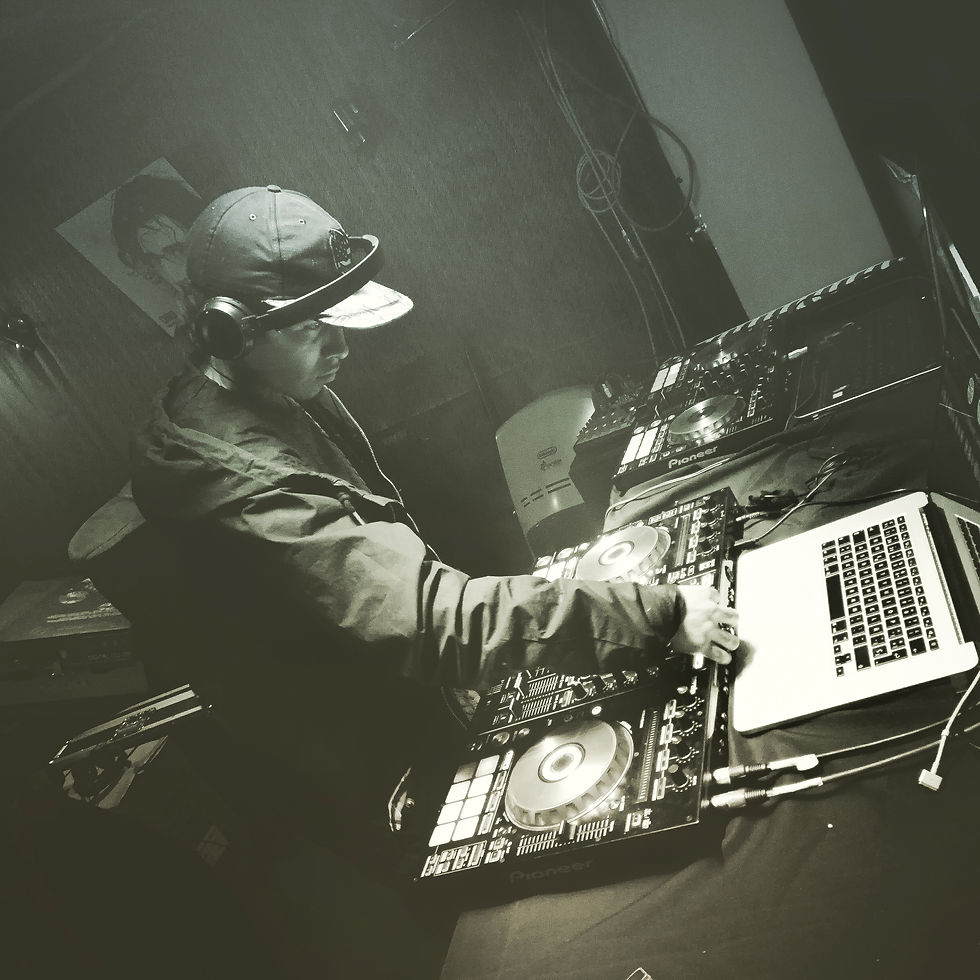
Please tell our All Crews readers about Atom Organazion.
Atom Organización was born over 7 years ago with the mission of bringing Bass Music events to life in Bolivia. Over the years, the scene has grown, and today Atom hosts some of the biggest and most influential Bass Music events in the country.
Since you’re a producer, please choose 3 of your tunes and tell us why these 3 tunes are really special to you.
Three tracks that are especially meaningful to me:
Llokalla de Mrda: I created this track in response to some critics who spoke poorly about Bass Music events. It quickly became one of my most recognized and played songs, representing the spirit and energy of our scene.
Imperfecto: When everything seemed perfect, the pandemic hit. I was confined at home, and my little cat fell ill. I couldn’t take him to the vet, and he passed away. That deep personal experience became the emotional core and inspiration for this track.
Tabla Siky: My very first track. I wanted it to hit hard, with three powerful kicks and deep sub-bass, setting the foundation for the sound I continue to explore today.
How do you see Drum and Bass/Jungle evolving in the future in Bolivia?
Drum and Bass in Bolivia is growing at an incredible pace. I truly believe that in just a few years, the scene will be stronger than ever. The future looks bright, full of energy, innovation, and a new generation of bass lovers ready to push the sound further.
Social Media Links:
Pardox

Please tell our All Crews Readers about 8 Active.
8 Active was born in Potosí, Bolivia, out of the need for a space where both DJs and the public could experience new frequencies and genres. In an already small scene dominated by Techno, House, Acid, etc., we decided to open the doors to other genres, including Bass Music and, primarily, Drum and Bass.
At first, it was difficult for us as a collective to get the public to accept these genres, but little by little we built a solid scene in which local and national artists can play a variety of genres and will be received by an audience eager for energetic and powerful genres.
Now that we've built a following, we're trying to keep our work afloat, and we're also happily opening spaces and events dedicated exclusively to Bass Music, and mainly to Drum and Bass and its derivatives, such as our latest franchise, "Bajo Zero."
"Bajo Zero" is an event dedicated solely to bass music based in Potosi, Bolivia, inspired by production companies such as "Sub Room" and "Atom Organizacion," which will soon tour Bolivia, expanding the bass music scene and primarily consolidating it in Potosi, Bolivia.
Tell us how you got into Drum N' Bass/Jungle.
My entry into the world of Drum and Bass was gradual, beginning my DJ career in 2015 with genres like dubstep and its derivatives. Moving around Bolivia over the years, I reached 2018 when electronic music in Bolivia underwent a significant evolution, presenting more underground genres at "Rave"-type events. At these events, I decided to maintain the aggressiveness of my genres, adapting them to the pure and progressive nature of Drum and Bass to present them to this new scene. This is how I explored a large majority of Drum and Bass subgenres, testing the energy they could deliver alongside the audience and expanding my repertoire to create a solid foundation. Currently, I am solidifying my sound within a range of dancefloor, jump-up, and liquid beats, which are characteristic of my sets.
What are some elements of the Drum and Bass/Jungle scene in Bolivia that you think make it different from scenes in other countries?
Primarily, the number of performers, promoters, and organizers. We are truly few in a country dominated by mainstream and popular genres. Therefore, our scene tends to be united, strong, collective, and collaborative, resulting in a scene unified by a common good, unlike the mainstream scene. We all support each other for the good of the genre and its derivatives!
Greetings and thank you for focusing on Bolivia and Potosi! You are always welcome!
Social Media Links:


Comments