
ALL CREWS INTERNATIONAL: ARGENTINA
- adancecalledhardwe
- Jan 27
- 10 min read
Updated: Feb 17
We’re back in South America chatting to more Jungle Drum & Bass heads, but this time we head south to Argentina..
Lydels

Please tell our All Crews readers about your debut album that you put out in November.
My debut album is kind of a new chapter for me as a Jungle/DnB producer. I realized that I wanted to incorporate more of myself and my culture in my music, so for the first time I made a jungle track with vocals in my native language, spanish. I've also started DJing this year which led me to make more danceable music that I can play in my sets. I took a lot of inspiration from old school jungle especially, the kind of music that was specifically made to be played on big speakers and sound systems instead of your room, and I paid special attention to the basslines, the breaks, the balance between melodic and aggressive, and the sampling. As always, I tried to combine that with my own style, piano melodies and vocals. I wanted to make music that is imperfect, noisy, fun, and full of feeling.
What are some of your goals as a Producer & a DJ?
I'd love to be able to contribute towards making the Jungle scene in Argentina grow bigger, either through my music or my DJ sets. Also, I would really like to be able to play or even just experience a jungle show in the UK or the US someday, somewhere with a big scene. I don't mind showing jungle to people who have never heard it, singing and dancing to my favourite tracks with a bunch of other people who love them as much as I do sounds like a dream. Other than that, I just want to keep making music. I love doing that and expressing myself that way.
What are some words of advice that you would offer other female DJ’s and producers who want to start DJing and producing music?
I think my main advice would be to trust yourself. Of course, learn from others, but always trust your creative decisions, knowledge, and music taste. It's easy to doubt yourself and what you're doing, especially in smaller scenes where there's not many of us and just being there already makes you feel out of place, but I think it's essential that you don't lose the things that make you special. It's intimidating, but we are already a rarity, so you might as well do whatever you want and stand out for your style and uniqueness instead.
Social Media Links:
BAD BOY ORANGE
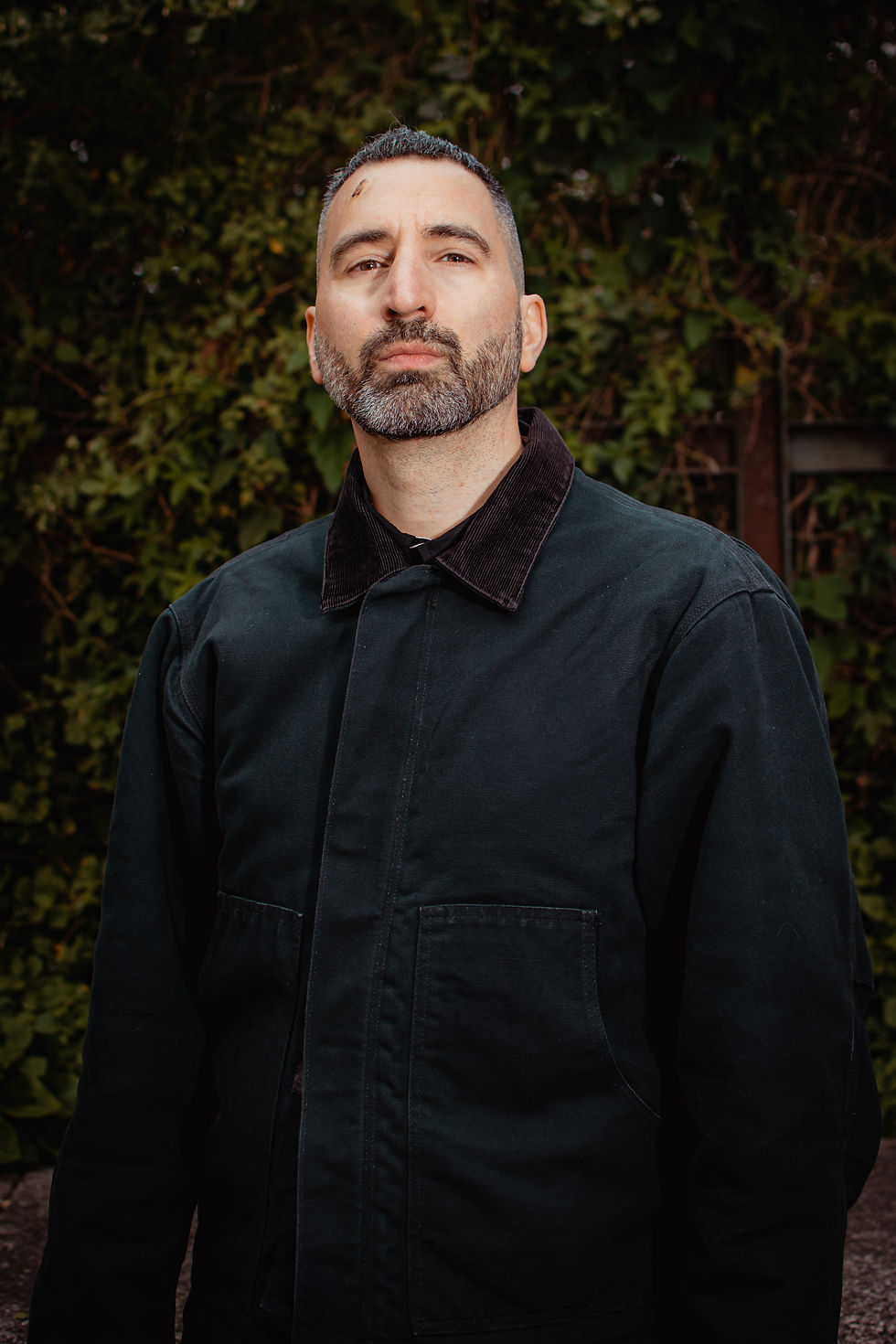
As one of the pioneers in Drum and Bass/Jungle in Argentina, how do you see the future of this music progressing in your country?
I started playing drum & bass back in 1997, at a time when there were no real spaces for this music in Argentina. Together with DJ Buey, we created Buenos Aires Frente Jungle, a collective designed to bring people together around a sound we genuinely loved. We tried everything, clubs, festivals, cultural events, and gradually helped carve out a place for the genre in the local scene.
In 2002 we launched +160 in Buenos Aires, a weekly Tuesday night that ran for more than a decade and still continues today as a monthly or bi-monthly event. That consistency helped the community grow and gave the music a home where there used to be none.
Looking ahead, I believe Drum & Bass in Argentina will continue evolving at its own steady pace. We’ll be here pushing it forward, keeping the doors open for the next generation, and connecting our scene with what’s happening globally.
Tell us a few of your most memorable experiences as a DJ.
Over the years we’ve brought many artists to Buenos Aires who, for me, are absolute legends: Dillinja, Shy FX, Goldie, Bryan Gee, dBridge, TC, Die, Suv, Digital, Sigma, Makoto, S.P.Y, Logistics, Random Movement, Artificial Intelligence, Dj Silver and many more. Each of those nights meant a lot to our scene, people in Argentina had the chance to experience artists they’d only heard on vinyl or radio.
Some of the highest points were the visits from DJ Marky (my all-time favourite), and the unforgettable performance by Jenna G. Another highlight was hosting Grooverider, he played at our club on a Friday night and then joined us the next day for a free event we organised for the community. Seeing someone of his calibre share music in that context was incredible. Moments like that are the heart of what +160 has always aimed to create.
When you hang up the headphones, how would you like people to remember you?
Truthfully, I don’t think I’ll ever “hang up the headphones”, being a DJ is simply part of my life. What matters to me is the message behind what I play. That message shifts and evolves, but the core idea remains the same, expanding the rhythmic imagination of the dancefloor and bringing a sense of freedom through sound.
I’ve always tried to open up new possibilities for how people experience dance music, and Drum & Bass has been my main tool to do that. If people look back one day, I hope they remember me as someone who pushed boundaries, challenged expectations, and kept the flame of musical curiosity burning.
Social Media Links:
DJ DOLARES

I know you're in Barcelona now, but you're Argentinian and lived there for a time, can you compare and contrast the music scenes in the two countries?
To be clear from the start, I don’t really consider myself part of the “official” Jungle/DNB scene in Argentina, but I started raving almost 15 years ago at the iconic +160, the DNB party in Buenos Aires run by Bad Boy Orange and that shaped my sound forever.
In Buenos Aires, the mainstream bass scene has leaned more toward dubstep and brostep in the past few years. When it comes to proper DNB and jungle, I’d say +160 and Córdoba’s Bullybass are the pioneers and have been doing it for almost two decades now.
In recent years, bass genres in general have gotten bigger and bigger, and during/after the pandemic a lot of new parties and collectives appeared with a more underground/DIY and cause or consequence, a more queer and multigenre approach. Many of them are run by women, which I think was something the bass scene, not just in Argentina, but worldwide was lacking before. In that wave I’d highlight the work of Caza Beats, Killerdrumz, everything Emiliata does across her projects, and Nital, run by Kbtz with a strong focus on footwork. All these projects incorporate DNB and jungle in a way that resonates with me, and that’s the scene where I feel most comfortable playing, unorthodox, experimental, mixing those genres with some 140 and also Latin sounds, bounce, or even techno.
In Barcelona, the bass scene is way smaller than in other places in Europe or the Americas, but it’s definitely growing. Everybody is playing bass-influenced music and throwing amen breaks here and there, but club nights specifically focused on DNB or jungle are still pretty niche. As in Buenos Aires, here I gravitate more toward the experimental/hybrid scene that incorporates these genres into more eclectic soundscapes. Overtone run by DJs and producers from the UK is basically a London capsule in Barcelona, covering everything from 140 to 160 and beyond. Dembooty is another multigenre collective with DNB/jungle influences that I really like. Of course Distorted, the collective and party I’m part of, run by A.Fruit, focused on experimental and distorted bass music from any genre you can imagine.
I think these sounds are bigger in Argentina and Latin America than in Spain. On both sides of the Atlantic, the “traditional” DNB/jungle scenes used to be very testosterone-heavy and a bit gatekeepy. I see the recent shift as something very positive, more FLINTA and queer people on both sides of the booth, and a general openness to different sounds and genres.
What genres do you play besides Drum and Bass/Jungle?
Well, I play pretty much every genre! Lately I’ve been more focused on bass in general, especially footwork/juke, but my sets are always about contrasts between different genres, footwork, techno, ghetto tek, hard drum, jungle, deconstructed club, even trance. Sometimes I lean more into broken beats, sometimes more into 4/4. I mostly like moving between extremes, always with a heavy bass/percussion and experimental approach. I mostly play above 145 bpm .
I actually made my first steps playing pop music in a local pub/club (yes!) and throwing my own pop party with friends (Vispera), so my approach is a bit anarchic and very track-focused. If it works, if it sounds good, then it works. I also get bored with super genre-focused sets; is a matter of taste ofc, but my brain needs to breathe, and I really enjoy the surprise factor
What do you think some elements are to being a great DJ?
For me, someone who loves all kinds of music, what makes a great DJ set is storytelling. I want to be taken through tension and release, through different temperatures, emotions, and states of mind. I love DJs who make you feel something. Selection is everything.
More deeply, I think it’s important to not be a poser and to really be a music lover. To have a background, to listen to all kinds of music, to be a listener before being a DJ. I think you can really feel that through a set. Some people know exactly what to download or buy to craft a set that fits a certain scene or crowd and of course you can do that, but that’s not the kind of DJ I am interested in.
Being super curious, open, and having a bit of innocence in the approach to music is key for me. Of course technical skills always helps, I’m not super technical myself, and I truly admire amazing storytellers who are also super technical, but I don’t care about technique when the selection has no soul. Being a dancer always helps, of course too.
Social Media Links:
DJ BUEY

Please tell our All Crews readers about +160.
+160 is the cornerstone of jungle and Drum’n’Bass music in Buenos Aires, Argentina. Over the years, it has become a true reference point, not only in Latin America but worldwide. Anyone who’s into this sound knows that +160 exists in Buenos Aires.
It’s Orange’s vision, and I’ve been involved since day one. It’s a privilege to still be doing this party 24 years later. It’s something we never could’ve imagined, and we’re extremely grateful to have kept it going for so many years.
Being one of the pioneers of Drum and Bass/Jungle in Argentina, how have you seen the scene evolve over the years?
This has been the result of many years of work, and above all, of understanding that anything meaningful takes time. +160 was fundamental in developing the scene because it put Drum and Bass on the map in Buenos Aires, it showed that there was a place where this music was happening.
That gave a boost for many people to launch their own parties and get involved in the sound. Now, after all these years, we’re seeing the results, a lot of people are interested in this music, several parties promote it, and most interesting of all, younger and younger crowds are getting into it.
That gives us a sense of long-term projection, and I’m really curious to see where Drum and Bass in Argentina and South America will be 10 years from now.
What are some of your interests and passions outside of music and DJing?
Music has opened the door to many other experiences for me. I spend a lot of time listening to music, all kinds of styles and I love going to live shows.
I also enjoy riding motorcycles, traveling (which I often do with my wife), and I practice Aikido. I try to exercise every day as well. You’ve got to stay active, that’s my advice.
Social Media Links:
DRUMANDAVID

Please tell our All Crews Readers about Liquidme Drum and Bass Sessions.
Liquidme was born as a Sunday afternoon proposal on a bar rooftop, with the intention of focusing on liquid DNB while complementing it with genres such as deep and minimal DNB, jungle, and rollers. The strong reception of the concept allowed the event to develop its own identity, which continues to evolve today, supporting new artists and establishing others as regulars who help define the character of the night.
Tell us about the Drum and Bass/Jungle scene in Argentina.
The DNB/Jungle scene in Argentina has been developing for many years, going through ups and downs much like the electronic scene in general. At the moment, the scene has a solid core of followers that makes it possible to host events in well-known electronic music venues such as +160 at Dune Park and Liquidme at The Shamrock.
Please share some background about yourself, how long have you been involved in Drum and Bass/Jungle, how did you start Djing?
Drum and Bass reached me in the late ’90s through intelligent DNB. Since around 2005, I’ve regularly maintained a DNB mix with updated music so I could take part in different events. I went through many periods where DNB was a complement to my sets, until the beginning of Liquidme, which marked the moment I fully committed to DnB, both as a DJ and as a producer.
Social Media Links:
DMF

Please tell our All Crews readers about the Quid Podcast.
The Quid Podcast was created as a platform to showcase both established and emerging Drum and Bass talent from around the world. We release one-hour mixes curated to maintain a strong musical identity while giving artists full freedom to express their sound. So far, we’ve released 25 podcasts, each representing a unique take on Drum and Bass from national and international artists. The goal has always been to support the scene, offer visibility, and connect digital exposure with real opportunities, including invites to play at our events. Over time, the podcast has grown into a space where artists share their vision and push the culture forward. For us, it’s more than a podcast, it's our contribution to the community we love.
Who are some of your musical influences from Drum and Bass/Jungle and outside of Drum and Bass/Jungle?
I’ve always been curious about music, and that curiosity led me through a lot of genres before I found Drum and Bass. I grew up listening to punk, rock, metal, and hip hop, bands like The Misfits, Deftones, Radiohead, Thrice, and a lot of Latin hip hop shaped my early musical identity. When I discovered electronic music and eventually Drum and Bass and Jungle, everything changed. Artists like Shy FX, High Contrast, Chase and Status, Makoto, Cyantific, and London Elektricity had a huge impact on me. Their sound, depth, and energy continue to influence how I listen, create, and curate music today.
How would you define your sound as a producer?
As a producer, I’ve always been versatile and open to exploring different styles from breakbeat, house, and dubstep to Drum and Bass and its many subgenres. In recent years, I’ve focused mainly on Drum and Bass, especially minimal, deep, and liquid funk. I would describe my sound as dark, simple, and experimental, with an emphasis on textures, atmospheres, and deep bass foundations. I enjoy creating space in the music and letting subtle details carry emotion and movement. For me, production is about exploration, finding balance between simplicity and character.
Social Media Links:


Comments